How to properly sharpen a chainsaw chain
At Zakservices in Senica we sharpen STIHL chainsaw chains, check the bar, and advise on files. The home procedure is below. If you are unsure, bring the saw.
How to properly sharpen a chainsaw chain
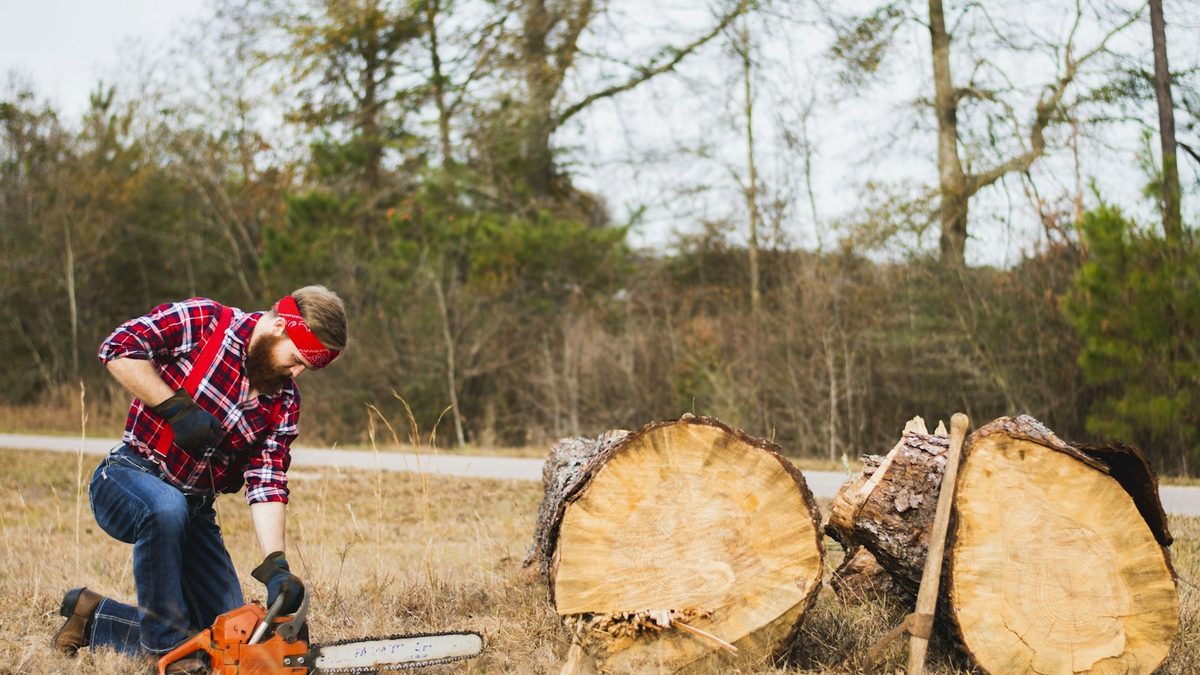
Chainsaw chain sharpening for STIHL saws is a service we regularly provide at Zakservices in Senica. Sharp cutters of equal length, the correct angle (for common STIHL chains typically 30°), the correct round-file diameter for the pitch, and a checked depth gauge after sharpening. The chain should feed into the cut with light pressure and throw chips, not fine dust.
Below you will find a practical guide for light home filing. If you do not have the right file or guide, or you are unsure about the angle and bar condition, bring the saw. We will sharpen the chain, check the bar and oiling, and advise on replacement when needed.
What you will learn in this article
- when the chain is dull and what to do
- which file and angle to use (STIHL basics)
- a checklist if you sharpen at home
- how to check the depth gauge
- common mistakes and safety
- when to leave it to Zakservices service, plus FAQ
Chain sharpening as a service in Senica
In our shop at Obchodná 493/2A we sharpen STIHL chainsaw chains, verify pitch and bar condition, and show a suitable file and guide if you want to maintain the chain yourself later. Come during opening hours, or call briefly first.
When it makes sense to come right away:
- you do not know the pitch, chain type, or file diameter
- cutters are uneven after hitting stone or a nail
- the saw cuts crooked, vibrates, or overheats even after a sharpening attempt
- you want a first walkthrough on your STIHL saw
- you prefer to leave sharpening and bar checks to the workshop
Home filing still makes sense for ordinary dulling when you have the right tools and time. This article helps you know what to do at home and when it is safer and faster to come to us.
When to sharpen the chain
Sharpen sooner rather than later. A dull chain loads the engine, bar, sprocket, and operator. For STIHL chains a simple rule applies: as soon as the cut worsens, give the cutters a short touch-up, not one heavy grind once a season.
Typical signs it is time to sharpen:
- The cut produces fine dust instead of fine chips.
- You must push into the cut. A sharp chain pulls itself into the wood.
- The saw cuts crooked or pulls to one side (often uneven left and right cutters).
- The cut takes longer, the engine works harder, and you smell overheating.
- After contact with sand, stone, nails, or soil the edge goes quickly. Sharpen at once, even after short work.
Practical rhythm: after a longer firewood session check a few teeth. After sandy or dusty work sharpen more often. Better two to three light strokes per tooth more often than one heavy reshaping. If you are unsure, bring the saw to Zakservices and we will assess it together.
What you need before sharpening
For common STIHL chains a simple kit is enough. Confirm the exact file diameter from the chain pitch and the saw manual. In the Senica shop we help you choose the file, guide, and gauge for the chain on your saw.
Basic kit:
- round file of the correct diameter (see the table below)
- filing guide / file holder (helps keep angle and height)
- flat file for depth gauges
- filing gauge for that chain pitch
- cut-resistant gloves, eye protection
- a stable stand or clamp for the saw, cleaning brush, optionally a cloth
Approximate STIHL round-file diameter table (code on the depth gauge):
| Code on depth gauge | Chain pitch | Round-file diameter |
|---|---|---|
| 1 | 1/4" | 4.0 mm |
| 2 | .325" | 4.8 mm |
| 3 | 3/8" | 5.2 mm |
| 4 | .404" | 5.5 mm |
| 6 | 3/8" Picco | 4.0 mm |
| 7 | 1/4" Picco | 3.2 mm |
If the marking is unreadable, measure the pitch or we will check it at Zakservices. Do not guess the diameter. A file that is too thick changes the tooth shape. A file that is too thin hollows the edge the wrong way.
File angle and height (basics)
On common STIHL chains cutters are usually filed at a 30° angle to the bar. Hold the file horizontally (90° to the side face of the bar). About one quarter of the file diameter should project above the top plate. Follow exceptions in the manual for your STIHL chain.
Important movement rules:
- file only on the forward stroke, lift on the return
- do not file tie straps or drive links
- rotate the file now and then so it does not wear on one side
- all cutters should end up the same length (file to the shortest)
A STIHL filing guide lowers the risk of a crooked angle. For a first attempt it is a sensible aid. In the shop we show what fits your pitch, or we sharpen the chain for you.
Checklist: how to sharpen step by step
Work calmly. Fast “by eye” filing often costs more time later on the bar and engine than a slow correct pass. If you want certainty about geometry and the bar, have the chain sharpened here the first time and watch the procedure.
- Switch off the engine and let the saw stop fully. On STIHL battery models remove the battery. On petrol, disconnect the spark-plug connector as in the manual.
- Engage the chain brake, set the saw stably (bench, vise, stand). Wear gloves and eye protection.
- Check chain tension. A loose chain is hard to file evenly. The chain should sit on the bar and have the free play described in the manual when lifted at mid-bar.
- Clean the chain and bar of chips, resin, and sand. Dirt skews the filing.
- Find the shortest or most damaged cutter on one side. Use it to set the stroke count for the other cutters on that side.
- Fit the filing guide for the correct pitch and angle (usually 30°). Place the file so it rests on the cutter and depth gauge as the holder design requires.
- File one cutter with several straight forward strokes (often from 2 to 5 light strokes for a normal touch-up, more after damage). Count the strokes.
- Work all cutters on one side with the same stroke count. Then turn the saw or change sides and do the other side the same way.
- Check cutter lengths. They should be as even as possible. Large differences cause vibration and risk of chain damage.
- Check the depth gauges with the filing gauge (next section) and lower them with a flat file if needed.
- Check oiling and bar condition (groove, oil hole, rail wear). Dull cutting often also reveals a dry bar.
- Before the first cut check tension, oil, and starting as in the manual, then make a test cut in clean wood.
Depth gauge: why it decides the cut
The depth gauge (the leading bump ahead of the cutter) sets how deep the tooth can enter the wood. If it stays too high, the chain skates. If you file it too low, the bite is aggressive and kickback risk rises.
How to proceed:
- After sharpening all cutters, place the filing gauge for that pitch on the chain.
- If the depth gauge protrudes above the gauge, lower it with a flat file (not the round file).
- Adjust all depth gauges equally.
- Lightly round the front corner of the depth gauge back to the original shape per the brand guidance / manual.
- On chains with a “humped” drive link (some STIHL), lower only the part named in the manual. Filing the wrong part can increase kickback tendency.
Approximate STIHL depth-gauge settings (always verify with the gauge and manual):
- 1/4 P: about 0.45 mm
- common pitches 1/4, .325, 3/8 and 3/8 Picco: often around 0.65 mm
- .404: about 0.80 mm
These numbers are a guide, not a substitute for the gauge. At Zakservices we show the right gauge for your STIHL chain, or we set the depth gauges during service sharpening.
Safety when sharpening and when cutting with a sharp chain
A sharp chain is safer than a dull one because you push less and control the cut better. Still:
- engine off, chain brake on, ignition disconnected or battery removed
- gloves and eye protection (flying chips and metal)
- stable saw position, never free filing “on your knee”
- correct tension before filing and before cutting
- after sharpening check bar oiling and sprocket condition
- when cutting keep a firm stance, avoid the bar tip (kickback risk), and do not cut into soil or stones
- if you are tired or the chain “jumps”, stop and check tension, edge, and bar
If you are new to a STIHL chainsaw, have the first sharpening done at Zakservices service and ask for a short walkthrough.
Most common sharpening mistakes
- Wrong file diameter. Weak or aggressive cutting and faster wear.
- Crooked angle (not 30° or not as for that chain type). The saw pulls sideways and cuts slowly.
- Filing on the return stroke. The file wears and the edge “tears”.
- Different stroke counts on left and right. Uneven cutters mean a crooked cut.
- Ignoring the depth gauge. Sharp cutters with a high depth gauge still cut poorly.
- Depth gauge too low. Aggressive bite, higher kickback risk.
- Filing a loose or dirty chain. Angle and height “float”.
- Continuing with damaged cutters after stone or metal. Equalize all cutters to the shortest, or replace the chain.
- Neglected bar and oil. Even a sharp chain works poorly on a dry or worn bar.
If after a home attempt the cut is still wrong, stop by in Senica. Often it is enough to even the geometry, set the depth gauge, or replace a worn bar.
When to replace the chain or bring it to service instead of filing
Home touch-ups make sense while the chain is intact and you have the right tools. Come to Zakservices in Senica especially when:
- you want chain sharpening as a service without worrying about angle and depth gauge
- cutters are impact-damaged (stone, nail, fence) and lengths differ a lot
- you do not know the pitch, chain type, or correct file
- the chain is already too short (cutters filed near the limit), rivets are loose, or there are cracks
- the saw vibrates, pulls, or overheats even after sharpening
- the bar has an uneven groove, worn rails, or poor oil flow
- the sprocket is heavily worn (replacing only the chain is then not enough)
- you want a first procedure walkthrough on your STIHL and a check of the file kit
In the workshop we check the chain, bar, tension, and oiling. Sometimes a new STIHL chain and a bar setup cost less than saving destroyed cutters. We confirm stock in person.
Short comparison: home or service
| Situation | At home | Zakservices service |
|---|---|---|
| Ordinary touch-up of sharp cutters | yes, with the right file | yes, if you want to save time |
| After sand / soil contact | yes, at once | yes, if you are unsure |
| Unknown chain type / angle | rather not | yes |
| Damaged cutters, crooked cut, vibration | rather not | yes |
| Worn bar / sprocket | limits | yes |
| First time with a STIHL chainsaw | with care | recommended |
Frequently asked questions (FAQ)
1. Do you sharpen chainsaw chains at Zakservices?
Yes. In Senica we sharpen STIHL chainsaw chains and check the depth gauge, bar, and oiling. Bring the saw, or call briefly first.
2. How often should I sharpen a chainsaw chain?
When the cut worsens, not by the calendar. With clean wood a short touch-up after several tanks or after a larger firewood batch is often enough. After sandy work or work near soil, sharpen at once.
3. What filing angle to use with STIHL?
For common STIHL chains the typical angle is 30°. Hold the file horizontal to the bar. Follow exceptions in the manual for the specific chain.
4. How do I know the correct file diameter?
Check the code on the cutter depth gauge and the STIHL table (for example code 2 = .325" = 4.8 mm, code 6 = 3/8" Picco = 4.0 mm). If you are unsure, we will check it at Zakservices from the chain on your saw.
5. Must I always adjust the depth gauge?
Yes, check it after filing the cutters. If it protrudes above the gauge, lower it with a flat file. Without a depth-gauge check the cut often stays weak even with sharp cutters.
6. Why does the saw still cut crooked after sharpening?
Most often uneven left and right filing, a wrong angle, a worn bar, or bad tension. Check the same stroke count on both sides and bar condition, or have it evened in the workshop.
7. Can I use an electric grinder instead of a file?
For home care a round file with a guide is the safest. Electric grinders need practice and can destroy tooth geometry quickly if misused. If you are not experienced, stay with hand filing or Zakservices service.
8. When should I stop filing and replace the chain?
When cutters are filed too short, rivets are damaged, there are cracks, or the cut is still unstable after correct filing and a bar check. Then a new STIHL chain plus bar and sprocket checks give a safer result.
We can help you at Zakservices Senica
If you need to sharpen a chain, check the bar, or choose a file and guide, bring your STIHL chainsaw to Zakservices. We will show the procedure, sharpen the chain, or suggest a replacement. We are sales and service in Senica.
Zakservices, s.r.o.
Obchodná 493/2A, 905 01 Senica (white building opposite the Kaufland parking)
Tel.: 0904 446 915, 034/651 7072
E-mail: zakservices@zakservices.sk
Opening hours: Monday to Friday 8:30 to 16:30
Web: https://zakservices.sk and https://zakservices.pages.dev/
Please confirm seasonal Saturday opening (April to June) by phone. We confirm specific accessories and stock in person.